
 by
by Have you ever watched a match where a perfectly timed shot, destined for six, gets caught at the boundary? Frustrating, right?
Welcome to cricket grounds with massive boundaries—where even the hardest hitters struggle to clear the ropes.
Boundary size dramatically changes cricket. Smaller grounds turn average batters into six-hitting machines.
But massive outfields? They separate the real power hitters from pretenders. They give bowlers breathing room. They make every boundary feel earned.
In 2025, some cricket venues around the world feature boundaries so large that batsmen need genuine power, not just timing.
These grounds test skill, stamina, and strategy in ways smaller venues never could.
Biggest Boundary Cricket Ground in World
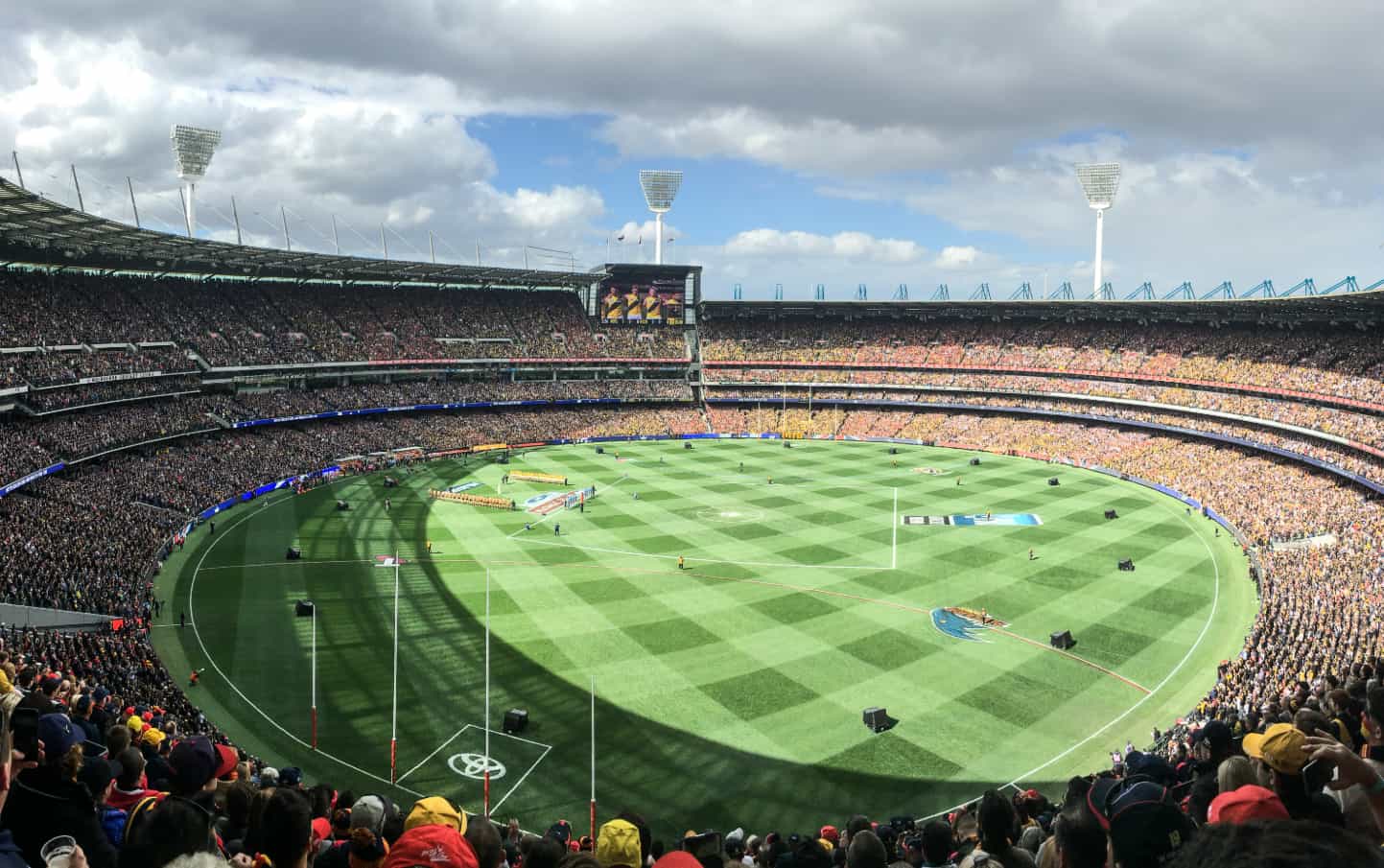
This comprehensive guide explores the biggest boundary cricket ground in world—from the iconic Melbourne Cricket Ground to India’s historic Eden Gardens.
We’ll break down exact measurements, compare straight versus square boundaries, and reveal why these dimensions matter so much in modern cricket.
Whether you’re curious about the top 10 biggest boundary cricket ground in the world or specifically want to know about the longest boundary cricket ground in India, this article covers everything.
We’ll use official statistics, historical context, and real match examples to paint the complete picture.
Ready to discover which stadiums make sixes the hardest to hit? Let’s explore cricket’s most expansive playing fields.
Understanding Cricket Boundary Measurements: The Basics
Before diving into specific stadiums, let’s clarify what “boundary size” actually means.
Official ICC Standards
According to International Cricket Council regulations:
- Minimum boundary length: 65 yards (approximately 59.43 meters)
- Maximum boundary length: 90 yards (approximately 82.29 meters)
These measurements are taken from the center of the pitch to the boundary rope.
Why Two Different Measurements?
Cricket grounds aren’t perfect circles. They’re typically oval-shaped, creating two distinct dimensions:
Straight Boundaries: The distance from the pitch to the boundary in line with the wickets (straight down the ground).
Square Boundaries: The distance perpendicular to the pitch (through the covers and mid-wicket regions).
Most grounds have longer square boundaries than straight ones, though exceptions exist.
What Affects Boundary Size?
Several factors determine a ground’s boundary dimensions:
- Stadium architecture and design
- Pitch placement (whether it’s centered or offset)
- Local regulations and preferences
- Historical infrastructure limitations
- Renovation and modernization efforts
The biggest boundary cricket ground in world by area doesn’t always mean the highest seating capacity. Melbourne Cricket Ground proves this—it has massive boundaries despite being only the second-largest by capacity.
Now let’s rank the world’s ten most expansive cricket venues.
Complete Rankings: Top 10 Biggest Boundary Cricket Grounds in 2025
Here’s the definitive list of cricket stadiums with the largest playing dimensions:
| Rank | Stadium | Country | Straight Boundary (m) | Square Boundary (m) | Seating Capacity |
|---|---|---|---|---|---|
| 1 | Melbourne Cricket Ground | Australia | 83.43 | 86.25 | 100,024 |
| 2 | Sydney Cricket Ground | Australia | 93.7 | 72.8 | 48,000 |
| 3 | SSC Cricket Ground | Sri Lanka | 86.09 | 77.0 | 10,000 |
| 4 | Hagley Oval | New Zealand | 83.5 | 77.45 | 20,000 |
| 5 | Basin Reserve | New Zealand | 81.7 | 72.48 | 11,600 |
| 6 | Lord’s Cricket Ground | England | 88.8 | 65.2 | 31,100 |
| 7 | Wanderers Stadium | South Africa | 86.75 | 64.1 | 34,000 |
| 8 | Kensington Oval | West Indies | 76.6 | 69.03 | 30,500 |
| 9 | Eden Gardens | India | 76–78 | 66–68 | 66,000 |
| 10 | Narendra Modi Stadium | India | 75 | 75 | 132,000 |
Notice something interesting? The world’s largest stadium by capacity (Narendra Modi Stadium) ranks tenth by boundary size. That’s because seating capacity and playing dimensions don’t always correlate.
The top 10 biggest boundary cricket ground in world spans four continents, with Australia and New Zealand dominating the list.
🏟️ 1. Melbourne Cricket Ground (Australia): The Undisputed Champion
Location: Melbourne, Victoria, Australia
Established: 1853
Straight Boundary: 83.43 meters
Square Boundary: 86.25 meters
Capacity: 100,024
Melbourne Cricket Ground—universally known as MCG or “The G”—holds the crown as the biggest boundary cricket ground in world.
Why MCG’s Boundaries Matter
With playing dimensions of 172.9m x 147.8m, the MCG offers one of cricket’s most challenging environments for batsmen. The Melbourne cricket ground boundary length forces even elite power hitters to reconsider aggressive shots.
Those square boundaries of 86.25 meters? They’re brutal. A mistimed pull shot that would sail for six at most grounds becomes an easy catch at MCG.
Historical Significance
MCG hosted the world’s first-ever Test match in March 1877 between Australia and England. Since then, it’s witnessed 148 years of cricket history—from Don Bradman’s innings to modern T20 spectacles.
The venue has undergone multiple renovations to maintain its status while preserving those massive playing dimensions that define it.
Player Perspectives
International cricketers consistently cite MCG as one of the toughest venues for hitting sixes. Former Australian captain Ricky Ponting once mentioned that boundaries at MCG are so large that batsmen need “genuine power, not just timing” to clear them.
During the 2015 World Cup final, when Australia defended 186 against New Zealand, those large boundaries played a crucial role. Shots that would’ve been sixes elsewhere fell short, tilting momentum toward the hosts.
Beyond Cricket
MCG isn’t just for cricket. It hosts Australian rules football, rugby, and even Olympic events. But cricket remains its soul, and those expansive boundaries remain its signature.
🏟️ 2. Sydney Cricket Ground (Australia): The Longest Straight Boundary
Location: Sydney, New South Wales, Australia
Established: 1851
Straight Boundary: 93.7 meters
Square Boundary: 72.8 meters
Capacity: 48,000+
Sydney Cricket Ground earns its place as the 2nd largest cricket stadium in the world by boundary dimensions—but it’s first in one crucial aspect.
The Monster Straight Boundary
That 93.7-meter straight boundary is the longest in international cricket. Think about that—nearly 94 meters from pitch to rope. Hitting a straight six at SCG requires incredible power and perfect timing.
However, the square boundaries at 72.8 meters are notably shorter than MCG’s. This creates unique strategic considerations. Batsmen target the square boundaries while being ultra-cautious hitting straight.
Architectural Marvel
Built in 1851, SCG is older than MCG by two years. The New South Wales Government owns and operates this multi-purpose venue that’s hosted cricket, Australian football, and rugby.
The ground’s oval shape creates that massive straight boundary while keeping square boundaries more manageable. It’s geometry in action.
Famous Matches and Moments
SCG has produced countless memorable cricket moments. From historic Ashes battles to World Cup clashes, those large boundaries have witnessed it all.
Indian legend Sachin Tendulkar called SCG one of his favorite overseas venues, despite—or perhaps because of—those challenging dimensions that tested his skill.
Current Status
With capacity expandable to 48,000 through temporary seating arrangements, SCG remains Australia’s second-most important cricket venue. Those boundary dimensions ensure it stays among the top 5 biggest cricket stadium in world by boundary.
🏟️ 3. Sinhalese Sports Club Cricket Ground (Sri Lanka): Subcontinent Giant
Location: Colombo, Sri Lanka
Established: 1952
Straight Boundary: 86.09 meters
Square Boundary: 77 meters
Capacity: 10,000
Don’t let the small capacity fool you. SSC Cricket Ground features some of the largest boundaries in Asian cricket.
Why SSC Stands Out
With straight boundaries exceeding 86 meters and square boundaries at 77 meters, SSC offers a rare challenge in the subcontinent where most venues favor batsmen with smaller dimensions.
The Sinhalese Sports Club owns and maintains this venue, which has hosted over 100 international matches since opening.
Playing Conditions
SSC pitches typically offer assistance to spinners—classic subcontinental conditions. But those large boundaries balance things. Where spinners might dominate on turning tracks at smaller venues, here batsmen have room to breathe and work the ball into gaps.
Notable Performances
Several Test matches at SSC have produced epic contests precisely because the large boundaries reward proper cricket shots over mindless hitting. Batsmen must build innings through running between wickets, not just clearing boundaries.
Sri Lankan legend Kumar Sangakkara scored several centuries here, using those large boundaries to his advantage by pushing singles and twos that forced fielders deeper.
🏟️ 4. Hagley Oval (New Zealand): Christchurch’s Beauty
Location: Christchurch, New Zealand
Established: 1851 (First match: 1867)
Straight Boundary: 83.5 meters
Square Boundary: 77.45 meters
Capacity: 20,000
Hagley Oval might not have massive seating, but its playing dimensions of 149m x 149m make it one of cricket’s most expansive venues.
Post-Earthquake Resurgence
After devastating earthquakes damaged Christchurch’s traditional cricket venues, Hagley Oval became New Zealand’s premier Test match location in the South Island.
The 2015 renovation increased capacity to 20,000 while maintaining those challenging boundary dimensions that make it special.
Why Bowlers Love Hagley Oval
With both straight and square boundaries exceeding 75 meters, Hagley Oval gives bowlers confidence to pitch up and attack. Mistimed drives don’t disappear for six—they become catching opportunities.
New Zealand’s pace attack, including Trent Boult and Tim Southee, have consistently praised Hagley Oval’s dimensions for rewarding good bowling.
Scenic Cricket
Beyond measurements, Hagley Oval offers stunning views of the Port Hills and Southern Alps. It’s voted among cricket’s most beautiful venues, combining challenging dimensions with natural beauty.
🏟️ 5. Basin Reserve (New Zealand): Wellington’s Historic Ground
Location: Wellington, New Zealand
Established: 1868
Straight Boundary: 81.7 meters
Square Boundary: 72.48 meters
Capacity: 11,600
Basin Reserve holds the distinction of being New Zealand’s oldest Test venue and one of its largest by boundary dimensions.
Mountain-Surrounded Cricket
Situated in Wellington and surrounded by mountains, Basin Reserve offers one of world cricket’s most picturesque settings. But don’t let the beauty distract from those challenging boundaries.
At over 80 meters straight and 72 meters square, Basin Reserve tests batsmen’s power and placement equally.
Historic Significance
Built in 1868, Basin Reserve has witnessed over 150 years of cricket history. It’s hosted countless Test matches, ODIs, and T20 internationals, with those large boundaries remaining constant through multiple renovations.
Windy Conditions Add Challenge
Wellington’s famous winds make batting at Basin Reserve even tougher. Large boundaries plus swirling winds equal difficult scoring conditions—perfect for Test cricket purists.
🏟️ 6. Lord’s Cricket Ground (England): The Home of Cricket
Location: London, England
Established: 1787
Straight Boundary: 88.8 meters
Square Boundary: 65.2 meters
Capacity: 31,100
Lord’s needs no introduction. As cricket’s spiritual home, it combines history with challenging playing dimensions.
The Lord’s Slope
What makes Lord’s unique isn’t just boundary size—it’s the famous slope that runs across the ground. Combined with that nearly 89-meter straight boundary, batting at Lord’s requires adjusting to unique conditions found nowhere else.
The square boundaries at 65.2 meters are notably shorter, creating strategic opportunities for batsmen who can pierce the off-side or leg-side fields.
Marylebone Cricket Club Heritage
Operated by the Marylebone Cricket Club since 1787, Lord’s has hosted countless historic matches. From Ashes battles to World Cup finals, those boundaries have witnessed cricket’s greatest moments.
The Biggest Boundary Cricket Ground in World in Meters
When discussing biggest boundary cricket ground in world in meters, Lord’s 88.8-meter straight boundary deserves special mention. It’s longer than most grounds’ square boundaries, showing how boundary dimensions vary globally.
🏟️ 7. Wanderers Stadium (South Africa): The Bullring
Location: Johannesburg, South Africa
Established: 1956
Straight Boundary: 86.75 meters
Square Boundary: 64.1 meters
Capacity: 34,000
Known affectionately as “The Bullring” for its intimidating atmosphere, Wanderers Stadium features some of Africa’s largest boundaries.
Johannesburg’s Cricket Cathedral
Located in South Africa’s largest city, Wanderers has hosted legendary matches since 1956. That 86.75-meter straight boundary makes it a bowler-friendly venue despite South Africa’s typically flat pitches.
The shorter square boundaries (64.1m) create interesting strategic dynamics. Batsmen favor the leg-side and off-side while being cautious driving straight.
High-Altitude Factor
Johannesburg sits at high altitude, meaning cricket balls travel farther than at sea-level venues. Yet those large boundaries still challenge even altitude-assisted shots.
Multi-Sport Venue
Like many Commonwealth grounds, Wanderers hosts rugby alongside cricket. But cricket remains its primary purpose, with those expansive boundaries defining its character.
🏟️ 8. Kensington Oval (West Indies): Caribbean Challenge
Location: Bridgetown, Barbados
Established: 1871
Straight Boundary: 76.6 meters
Square Boundary: 69.03 meters
Capacity: 30,500
Kensington Oval stands as one of cricket’s oldest international venues and the Caribbean’s most challenging by boundary dimensions.
2007 World Cup Renovation
Ahead of the 2007 ODI World Cup, Kensington Oval underwent a USD 45 million renovation. While modernizing facilities, planners maintained those traditional large boundaries that define Caribbean cricket.
Historic Matches
From legendary West Indies innings to modern T20 spectacles, Kensington Oval has seen everything. Those 76-meter-plus boundaries have frustrated many visiting batsmen expecting easier Caribbean conditions.
Current Status
With 30,500 capacity, Kensington Oval regularly hosts international cricket. The Barbados Cricket Association operates it, ensuring those boundary dimensions remain preserved for future generations.
🏟️ 9. Eden Gardens (India): The Longest Boundary Cricket Ground in India
Location: Kolkata, West Bengal, India
Established: 1864
Straight Boundary: 76–78 meters
Square Boundary: 66–68 meters
Capacity: 66,000
Eden Gardens earns recognition as the longest boundary cricket ground in India, making it unique among subcontinental venues.
Historic Significance
Before Narendra Modi Stadium’s construction, Eden Gardens was India’s largest cricket venue. During the 1996 World Cup semi-final between India and Sri Lanka, it hosted 110,564 spectators—still a world record.
Boundary Evolution
The 2010-11 renovation reduced capacity from 100,000+ to 66,000 but maintained boundary dimensions between 76-78 meters straight and 66-68 meters square.
These measurements make Eden Gardens unusual for Indian cricket, where most venues feature smaller boundaries to encourage high-scoring matches.
Strategic Impact
Those large boundaries at Eden Gardens change match dynamics significantly. T20 matches here produce lower scores than at smaller Indian venues. Bowlers get assistance not from pitch conditions but from sheer distance to the ropes.
Cricket Association of Bengal
CAB operates Eden Gardens, maintaining its status as one of world cricket’s most atmospheric venues. Those boundaries ensure it remains among the top 5 biggest cricket stadium in world by boundary.
🏟️ 10. Narendra Modi Stadium (India): Capacity Giant with Balanced Boundaries
Location: Ahmedabad, Gujarat, India
Established: Reconstructed 2021
Straight Boundary: 75 meters
Square Boundary: 75 meters
Capacity: 132,000
Narendra Modi Stadium holds the title of world’s largest cricket venue by seating capacity. Yet its boundary dimensions rank tenth globally—proving size doesn’t always equal large boundaries.
The Reconstruction Project
Previously known as Motera Stadium, it underwent complete reconstruction in 2021 at a cost of approximately USD 95 million (₹800 crore). The Gujarat Cricket Association spared no expense creating this modern marvel.
Unique Symmetry
What makes Narendra Modi Stadium interesting is its perfectly balanced 75-meter boundaries in all directions. Most grounds have varying dimensions; this one offers symmetry that affects strategy.
Batsmen can’t target shorter boundaries because none exist. Bowlers can’t get complacent knowing one side is shorter. Everything is equidistant.
Hosting Major Events
Despite ranking tenth by boundary size, Narendra Modi Stadium hosts India’s biggest matches due to its capacity. The 2021 India vs England Test and multiple IPL matches have showcased how those 75-meter boundaries balance batting and bowling.
Indian Boundaries vs. Global Standards: A Comparison
Indian cricket grounds typically feature smaller boundaries than Australian, English, or New Zealand venues. But Eden Gardens and Narendra Modi Stadium buck this trend.
Why Indian Grounds Usually Have Smaller Boundaries
Several factors explain India’s traditionally smaller boundaries:
- Colonial-era construction with limited space in city centers
- Preference for high-scoring entertainment in limited-overs cricket
- Stadium designs prioritizing seating capacity over playing area
- Hot weather considerations reducing stamina for extensive fielding
Eden Gardens: The Exception
At 76-78 meters, Eden Gardens offers dimensions comparable to international standards. This makes it the longest boundary cricket ground in India and changes how matches unfold there.
Batsmen can’t rely on mishits clearing boundaries. Bowlers can attack knowing mistimed shots won’t disappear for six. It’s proper cricket, rewarding skill over power.
Narendra Modi Stadium’s Balance
With consistent 75-meter boundaries, Narendra Modi Stadium sits just below Eden Gardens but above most other Indian venues like Wankhede (smaller boundaries) or Chinnaswamy (notoriously short boundaries).
Impact on Match Results
Statistics show Eden Gardens produces lower scores in T20s compared to smaller Indian venues. The 2016 IPL season at Eden Gardens averaged 160 runs per innings—significantly lower than Chinnaswamy’s 180+ average.
Large boundaries matter.
Why Boundary Size Dramatically Affects Modern Cricket?
Boundary dimensions aren’t just trivia—they fundamentally shape how cricket is played.
For Batsmen
Small Boundaries:
- Encourage aggressive shot-making
- Allow mishits to clear ropes
- Favor T20 specialists over traditional batsmen
- Reduce value of placement and running between wickets
Large Boundaries:
- Reward proper technique and timing
- Punish mistimed shots with catches
- Require fitness for converting singles to twos
- Test genuine power, not just bat speed
For Bowlers
Small Boundaries:
- Force defensive fields
- Make yorkers and slower balls crucial
- Increase pressure and error rates
- Favor death-over specialists
Large Boundaries:
- Allow attacking fields
- Reward good length bowling
- Reduce pressure on individual deliveries
- Favor traditional swing and seam bowlers
Strategic Considerations
Teams analyze boundary dimensions before matches. At MCG or SCG, captains set more aggressive fields knowing batsmen need genuine power. At smaller venues, fielders spread to boundaries immediately.
The biggest boundary cricket ground in world therefore influences team selection, bowling plans, batting orders, and tactical decisions throughout matches.
Fun Facts: Boundary Size Edition
- Longest Single Boundary in Cricket
Sydney Cricket Ground’s 93.7-meter straight boundary holds this record. No other venue comes close to that dimension.
- Most Symmetrical Ground
Narendra Modi Stadium’s perfect 75m x 75m dimensions make it the most symmetrical large cricket ground globally.
- Bowler’s Paradise
Bowlers consistently rank MCG and SCG as their favorite venues due to large boundaries giving them confidence to attack.
- Biggest Six at a Large Boundary Ground
At Melbourne Cricket Ground, Pakistani batsman Shahid Afridi once hit a six that traveled an estimated 158 meters—one of cricket’s longest recorded sixes. Even at cricket’s largest venue, that shot comfortably cleared the ropes.
- Fastest Fifty Challenge
Records show the fastest T20 fifties rarely occur at grounds with large boundaries. Most come at venues with sub-70-meter dimensions.
Final Word: Where Cricket Returns to Its Roots
The biggest boundary cricket ground in world represents more than measurements.
They symbolize cricket’s soul—where skill, strategy, and genuine athleticism matter more than raw power alone.
Melbourne Cricket Ground, Sydney Cricket Ground, and others on this list preserve cricket’s traditional values.
They remind us that boundaries should be earned, not gifted. That sixes should inspire awe, not become routine.
In an era of shortened formats and entertainment-focused cricket, these large grounds serve crucial purposes.
They host Test matches where patience gets rewarded. They produce T20 games where 160 is competitive, not 200. They give bowlers fighting chances in batting-dominated modern cricket.
India’s Eden Gardens and Narendra Modi Stadium show the subcontinent can embrace larger boundaries too. As cricket evolves, perhaps more venues will follow—creating balanced contests between bat and ball.
Next time you watch a match at MCG and see a batsman’s shot fall short of the boundary, appreciate it. That’s proper cricket. That’s the challenge these massive grounds provide.
The top 10 biggest boundary cricket ground in the world aren’t just venues—they’re guardians of cricket’s competitive spirit.
Long may they stand.