 by
by Cricket Australia operates one of the most structured payment frameworks in international cricket.
The system combines guaranteed retainers with performance-based match fees across three formats.
The australian cricket players salary 2026 model provides a benchmark for evaluating how cricket boards compensate players relative to revenue generation and squad size.
Australia’s approach differs fundamentally from both high-revenue boards like the BCCI and smaller cricket nations.
Australian Cricket Players Salary 2026-27
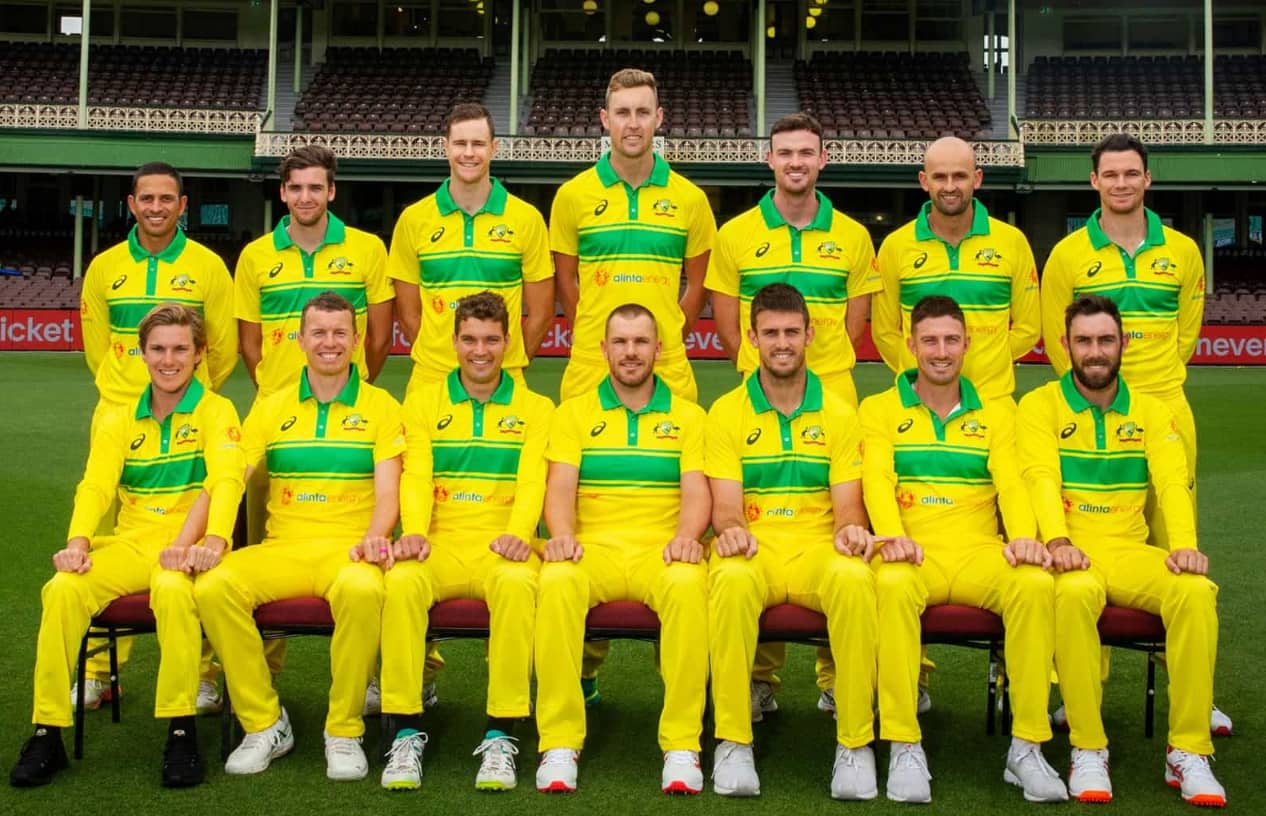
This analysis examines internal salary distribution, contract allocation mechanisms, and comparative positioning against other international cricket boards.
Australian Cricket Players Salary List 2025-26
| Player Name | Retainer Fee | Test Fee | ODI Fee | T20I Fee |
|---|---|---|---|---|
| Pat Cummins | $2 million | $20,000 | $15,000 | $10,000 |
| Josh Hazlewood | $1.6 million | $20,000 | $15,000 | $10,000 |
| Mitchell Starc | $1.4 million | $20,000 | $15,000 | $10,000 |
| Steve Smith | $1.3 million | $20,000 | $15,000 | $10,000 |
| Marnus Labuschagne | $1.2 million | $20,000 | $15,000 | $10,000 |
| Nathan Lyon | $1.1 million | $20,000 | $15,000 | $10,000 |
The Australian Cricket Players Salary structure shows significant internal stratification. Pat Cummins’ $2 million retainer represents 82% more than Nathan Lyon’s $1.1 million, indicating clear tier separation based on captaincy and all-format availability.
Match fees remain uniform across contract tiers, meaning total annual income varies primarily through retainer amounts and match participation frequency. A player appearing in 10 Tests earns $200,000 in match fees regardless of their base retainer level.
Australia’s Centrally Contracted Players List (2025-26)
| No. | Player Name |
|---|---|
| 1 | Xavier Bartlett |
| 2 | Scott Boland |
| 3 | Alex Carey |
| 4 | Pat Cummins |
| 5 | Nathan Ellis |
| 6 | Cameron Green |
| 7 | Josh Hazlewood |
| 8 | Travis Head |
| 9 | Josh Inglis |
| 10 | Usman Khawaja |
| 11 | Sam Konstas |
| 12 | Matthew Kuhnemann |
| 13 | Marnus Labuschagne |
| 14 | Nathan Lyon |
| 15 | Mitchell Marsh |
| 16 | Glenn Maxwell |
| 17 | Lance Morris |
| 18 | Jhye Richardson |
| 19 | Matt Short |
| 20 | Steve Smith |
| 21 | Mitchell Starc |
| 22 | Beau Webster |
| 23 | Adam Zampa |
The 23-player contracted pool includes players aged from early 20s to late 30s.
Sam Konstas and Lance Morris represent future investment, while Steve Smith and Nathan Lyon provide immediate Test cricket value.
The Australian Cricket Players Salaries framework covers three new additions this cycle—Konstas, Webster, and Kuhnemann – while removing three previous contract holders.
This 13% annual turnover rate indicates moderate contract stability compared to boards with higher churn rates.
How does the Central Contract System work?
- Points-Based Evaluation System
Cricket Australia weighs formats differently in its performance evaluation. Test matches carry 5 points versus 2 for ODIs and 1 for T20Is, reflecting longer match duration and traditionally higher status within Australian cricket culture.
- Automatic Contract Upgrade Rule
The 12-point threshold creates objective contract eligibility independent of selectors’ subjective assessments. A player achieving 2 Tests, 4 ODIs, and 3 T20Is reaches exactly 12 points, triggering mandatory consideration for the next contract cycle.
- Selectors’ Role in Contracts
National selectors forecast player utilization across the upcoming 12-month period rather than rewarding past performance exclusively. This forward-looking approach differs from retrospective contract models used by several other international boards.
Match Fees Breakdown
| Format | Match Fee |
|---|---|
| Test | $20,000 |
| ODI | $15,000 |
| T20I | $10,000 |
The Australian Cricket Players Match Fees structure assigns Test cricket a 2:1 value ratio over T20Is. This 100% premium reflects both match duration (five days versus three hours) and Cricket Australia’s strategic prioritization of Test cricket within its competition hierarchy.
Earnings Beyond Central Contracts
- Domestic League Income (BBL)
Big Bash League contracts add $50,000 to $340,000 annually, depending on player category. This represents 2.5% to 17% of top retainer values, indicating BBL income functions as supplementary rather than primary revenue for contracted players.
- Overseas Franchise Leagues (IPL, WPL, Hundred)
Australian players access multiple franchise markets, generating combined annual income often exceeding central contract values. Pat Cummins’ IPL earnings alone match his Cricket Australia retainer, effectively doubling his cricket-related income before match fees.
- ICC Tournament Bonuses
Performance incentives for ICC events operate separately from base contracts. World Test Championship victory bonuses reportedly distributed six-figure payments per player, adding 5-10% to annual contracted income.
- Brand Endorsements
Commercial partnerships for leading players generate $200,000 to $1 million annually. The Australian Cricket Players Earnings structure increasingly relies on these external revenue streams for top-tier athletes, particularly those with high IPL visibility.
Why Central Contracts Matter?
- Financial Stability for Players
Guaranteed annual retainers provide income security during injury periods or form slumps. This baseline payment continues regardless of match selection, differentiating contracted from non-contracted players who earn only match fees.
- Format-Specific Role Recognition
The Australian Cricket Players Central Contract system compensates specialists appropriately across formats. Nathan Lyon’s Test focus and Adam Zampa’s white-ball specialization both receive contract recognition despite limited crossover between formats.
- Long-Term Team Continuity
Contracted status obligates player availability for national duties over conflicting opportunities. This exclusivity clause ensures squad stability across bilateral series and ICC events, preventing fragmented commitments.
- Pathway for Young Players
The transparent points mechanism provides non-contracted players with defined progression criteria. This objectivity contrasts with boards using discretionary contract renewals without published performance thresholds.
Australian Women Cricketers Salary 2026
| Player Name | Primary Income Source | Estimated Annual Earnings |
|---|---|---|
| Ellyse Perry | CA Contract + WPL + Endorsements | $1.2 million+ |
| Ash Gardner | CA Contract + WPL | $1.1 million+ |
| Alyssa Healy | CA Contract + WPL + Hundred | $1 million+ |
| Annabel Sutherland | CA Contract + WPL | $1 million+ |
| Beth Mooney | CA Contract + WPL | $1 million+ |
Five Australian women now exceed $1 million annual earnings compared to zero women crossing this threshold three years ago. This growth velocity significantly outpaces men’s cricket where top earners increased approximately 15-20% over the same period.
The Australian Women Cricketers Salary 2026 landscape demonstrates how franchise league introduction accelerates income potential faster than incremental central contract increases. WPL alone contributes $300,000 to $550,000 annually for Australian players, representing 30-50% of total earnings.
Why Australian Cricketers Earn So Much?
- Strong Revenue Sharing Model
Cricket Australia allocates approximately 27% of cricket-related revenue to player payments. This percentage exceeds most international boards operating at 15-20% player revenue allocation, directly translating higher organizational income into superior player compensation.
- Limited Contract Slots
Twenty-three contracted players split available contract revenue versus India’s 30+ players or England’s 25-30 player pool. This concentration raises average per-player payments while maintaining comparable total player budget expenditure across high-revenue boards.
- High Global Franchise Demand
Australian players consistently command premium T20 league auction prices. This external market validation strengthens negotiating positions with Cricket Australia, creating upward pressure on domestic contract values to retain players.
- Consistent On-Field Performance
Australia maintains top-three ICC rankings across all formats. This sustained competitive success justifies premium player investment as organizational revenue from broadcasting rights and sponsorships correlates with on-field results.
Australian Cricket Players Salary Contract vs Other Team Players
| Country | Top Retainer (Approx) |
|---|---|
| Australia | $2 million |
| England | $995,000 |
| India | $311,000 |
| South Africa | $363,000 |
| New Zealand | $144,000 |
| Pakistan | $74,000 |
| Bangladesh | $60,000 |
| Zimbabwe | $66,000 |
Australia’s top retainer exceeds England by 101% despite comparable organizational revenues. This differential reflects Cricket Australia’s strategic choice to contract fewer players at higher individual values rather than distributing contracts across larger squad pools.
India’s apparently lower retainer values mislead without accounting for match fees and bonuses that often triple annual base contracts. However, even accounting for these additions, Australian guaranteed income remains 40-60% higher than BCCI equivalents.
Conclusion:
The Australian cricket players salary 2026 framework operates as the highest-paying central contract system globally. Pat Cummins’ $2 million retainer alone exceeds top contracts in Pakistan, Bangladesh, Zimbabwe, and Sri Lanka combined.
Australia’s financial advantage stems from concentrated contract distribution among 23 players rather than spreading budgets across 30+ squad members. This structural efficiency raises per-player compensation without proportionally increasing total expenditure.
Revenue-sharing agreements guarantee player income grows alongside organizational revenue. This sustainability mechanism differentiates Australia from boards where contract values depend on annual profitability rather than predetermined revenue allocation percentages.
Women’s cricket demonstrates the fastest salary growth trajectory, with five Australian women now earning seven-figure annual incomes. This acceleration outpaces men’s cricket growth rates primarily through WPL franchise participation rather than central contract increases alone.
Global comparisons confirm Australia’s structural advantages will likely persist, given limited contract slots, strong revenue-sharing frameworks, and consistent on-field performance, maintaining high broadcasting and sponsorship revenues.