
 by
by If you love cricket, you’ve probably heard players debate about Kashmir willow and English willow bats. But what’s the real difference? And more importantly, which one should you buy?
Walk into any cricket store and you’ll face this exact question. The shopkeeper might show you two bats that look almost identical. But one costs ₹3,000 while the other costs ₹30,000.
Why such a massive price gap?
The answer lies in the type of willow wood used. Kashmir willow vs English willow isn’t just about where the wood comes from; it’s about completely different playing experiences, performance levels, and suitability for different types of cricketers.
Kashmir willow gives you toughness and affordability. It’s the reliable workhorse that beginners love because it survives rough treatment and doesn’t empty your wallet.
English willow gives you performance and power. It’s what Virat Kohli, Joe Root, and every IPL player uses because it makes hitting boundaries significantly easier.
But here’s the thing: the “better” bat depends entirely on who you are as a cricketer. Your skill level. Your budget. How seriously you take the game.
Kashmir Willow vs English Willow
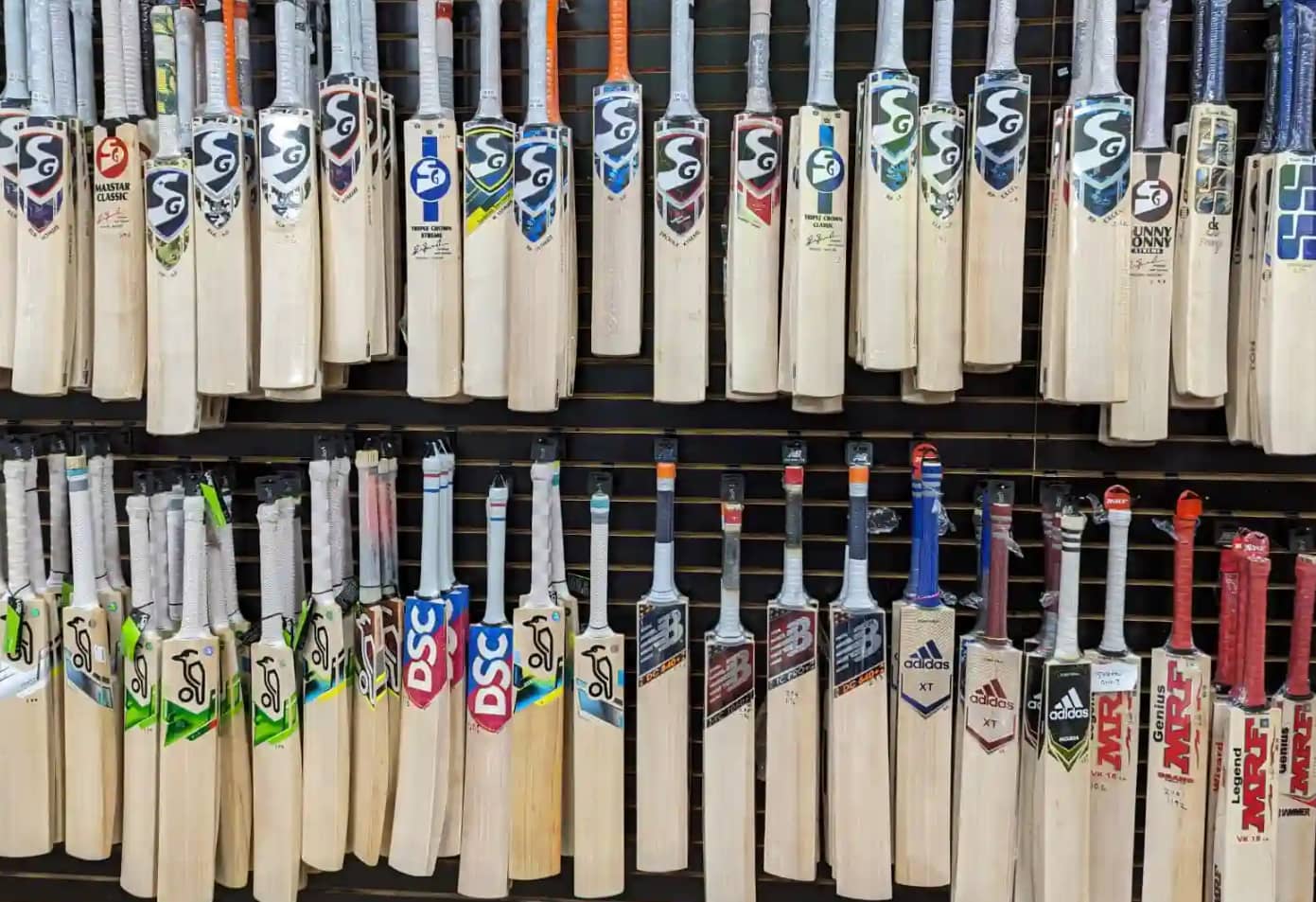
This guide breaks down everything in simple, clear language. No confusing technical terms. No sales pitch. Just honest information to help you make the right choice.
By the end, you’ll know exactly which bat suits your game.
Let’s get started.
Did You Know? In Which Country Was The Googly Invented
Why Willow Wood Is Special for Cricket Bats?
Before we compare Kashmir and English willow, let’s understand why cricket bats are made from willow in the first place.
Willow is a unique type of wood with some remarkable properties:
- Lightweight but Strong: Willow is light enough to swing fast but strong enough not to break easily when struck by a hard leather ball traveling at 140+ kmph.
- Natural Shock Absorption: The wood’s fibrous structure absorbs impact brilliantly, protecting your hands from jarring shocks while transferring energy efficiently to the ball.
- Perfect Flexibility: Willow has just the right amount of give. Too hard and it won’t generate power. Too soft and it cracks easily. Willow sits in the sweet spot.
Where Willow Grows:
Two main types dominate cricket bat manufacturing:
- Kashmir Willow Tree: Grows in northern India, particularly Kashmir and surrounding regions. The warmer climate produces denser, harder wood. These trees grow faster and are more readily available.
- English Willow Tree: Grows primarily in England’s cooler, wetter climate (especially East Anglia). The specific growing conditions produce softer, lighter wood with more natural moisture. These trees grow more slowly and are less abundant.
These environmental differences create the fundamental distinctions between the two bat types.
Did You Know? World Fastest Bowler Ranking
Kashmir Willow Bat: The Tough and Reliable Option
Let’s start with the more common choice you’ll see across India.
Kashmir willow bat is made from wood sourced from northern Indian regions. It’s the go-to choice for millions of cricket players, especially those just starting their cricket journey.
Key Characteristics:
How It Looks:
- Darker color (brownish or tan shade)
- Rougher surface texture
- Less visible grain lines
- Heavier when picked up
How It Performs:
- Harder wood requires more effort to generate power
- Smaller sweet spot compared to English willow
- Less responsive rebound on impact
- Works great with tennis balls and rubber balls
Durability:
- Extremely tough and long-lasting
- Survives rough pitches without damage
- Can handle casual treatment
- Minimal maintenance needed
Perfect For:
You’ll commonly find Kashmir willow bats in:
- School cricket matches across India
- Cricket academies and training centers
- Local neighborhood matches
- Tape-ball and tennis-ball cricket
- Budget-conscious players building skills
Real-Life Example:
Visit any government school cricket practice session. Most students will be using Kashmir willow bats.
Why? Because these bats survive cement pitches, they can be dropped without cracking, and schools can afford to buy multiple bats without breaking budgets.
One Kashmir willow bat can easily last 2-3 years of regular school-level play. That’s incredible value for money.
Did You Know? Virat Kohli Total Centuries in All Format
English Willow Bat: The Performance Powerhouse
Now let’s talk about the premium option that professionals swear by.
English willow bat is made from wood grown primarily in England (and some from Australia/New Zealand). This is what you see in every international match, IPL game, and serious tournament.
Key Characteristics:
How It Looks:
- Lighter color (cream or pale yellow)
- Smooth, refined surface
- 6-12 clearly visible straight grains on quality bats
- Professional finish
How It Performs:
- Generates power with minimal effort
- Larger, more responsive sweet spot
- Better rebound and ball-ping effect
- Superior timing and stroke play
Maintenance Requirements:
- Needs regular oiling with raw linseed oil
- Requires proper knocking-in before first use
- Must be stored carefully
- More prone to cracking if neglected
Who Uses It:
English willow dominates at:
- International Test, ODI, and T20 matches
- Indian Premier League (IPL)
- All major T20 leagues worldwide
- Club-level competitive cricket
- First-class and List A cricket
Real-Life Example:
Watch any IPL match tonight. Virat Kohli, Rohit Sharma, Jos Buttler, and David Warner—every single player uses a custom-made English willow bat.
These bats often cost $500-$1000 and are specifically crafted for each player’s unique style.
Why? Because at professional levels, even a 5% performance improvement matters enormously. English willow provides that edge.
The Complete Side-by-Side Comparison
Let’s break down Kashmir willow vs English willow with a clear, easy-to-read comparison:
| Feature | Kashmir Willow | English Willow |
|---|---|---|
| Where It Comes From | Kashmir, India | England (mainly) |
| Wood Type | Dense and hard | Soft and light |
| Weight | Heavier (1.2-1.4 kg) | Lighter (1.0-1.2 kg) |
| Color | Darker brown/tan | Light cream/yellow |
| Surface | Rough texture | Smooth finish |
| Grain Visibility | Less visible | Clear straight grains |
| Durability | Very high | Moderate (needs care) |
| Power Generation | Requires effort | Easy power |
| Sweet Spot | Smaller | Larger |
| Maintenance | Minimal | Regular oiling needed |
| Price Range | ₹2,000-₹8,000 | ₹15,000-₹50,000+ |
| Best Suited For | Beginners, practice | Competitive matches |
| Ideal Ball Type | Tennis/rubber | Leather ball |
| Typical Lifespan | 2-4 years | 1-2 years (with care) |
This table makes the fundamental differences crystal clear. But let’s dive deeper into the most important factors.
Power and Performance: The Game-Changer
This is where Kashmir willow vs English willow which is better becomes most obvious.
How English Willow Creates Power:
English willow contains more natural moisture in its wood fibers. When the leather ball strikes, the wood compresses slightly, stores energy, and then rebounds. This compression-rebound cycle transfers energy efficiently.
Think of it like a spring or trampoline. The surface gives, stores energy, then releases it explosively. You get free power just from the bat’s natural properties.
How Kashmir Willow Works:
Kashmir willow is denser with lower moisture content. When the ball hits, there’s minimal compression. The wood is so hard it barely gives. You must generate all power yourself through bat speed and muscle.
Think of hitting a ball against a concrete wall. The wall doesn’t help—it’s all your effort.
Real-World Impact:
With English willow, a well-timed defensive push can race to the boundary. The bat does half the work for you.
With Kashmir willow, you need a full-blooded swing with perfect timing to achieve the same result. The bat does not assist.
That’s why, which bat is best for leather ball Kashmir willow or English willow has a definitive answer: English willow wins convincingly for leather ball cricket, where precision and timing matter most.
Weight: Why It Matters More Than You Think?
Kashmir willow vs English willow weight differences significantly affect your game.
Kashmir Willow Weight:
- Typically 1.2-1.4 kg
- Feels heavier in the hands
- Harder to maneuver quickly
- Requires more physical strength
- Can tire younger players
English Willow Weight:
- Typically 1.0-1.2 kg
- Feels lighter and balanced
- Easy to swing fast
- Better for quick adjustments
- Less physically demanding
Why This Matters:
Imagine batting for 15 overs with a heavy bat. Your forearms burn. Your timing suffers. You can’t play delicate shots anymore.
Now imagine the same innings with a perfectly balanced lighter bat. You stay fresh longer. Your wrists work better for placement. You can bat longer innings without fatigue.
For young cricketers, especially, starting with an overly heavy Kashmir willow bat can actually harm technique development. The weight forces poor habits.
The Price Reality: What You Actually Pay
Let’s talk about the Kashmir willow vs English willow price differences honestly.
Kashmir Willow Pricing:
- Basic quality: ₹1,500-₹3,000
- Good quality: ₹3,000-₹5,000
- Premium Kashmir willow: ₹5,000-₹8,000
English Willow Pricing:
- Entry-level (Grade 4-5): ₹12,000-₹20,000
- Mid-range (Grade 2-3): ₹20,000-₹35,000
- Premium (Grade 1): ₹35,000-₹50,000
- Professional custom: ₹50,000-₹1,00,000+
Is the Price Difference Justified?
Honestly? Yes, but only if you’re at the right level.
Kashmir willow makes sense when:
- You’re learning basic cricket skills
- You play casually or occasionally
- The budget is limited
- You’re under 15 years old
- You practice on rough pitches
English willow is worth it when:
- You play competitive cricket regularly
- You’ve mastered fundamental techniques
- You use leather balls primarily
- You play for a club or academy team
- Performance improvement matters
Many smart players use this strategy: Buy Kashmir willow for practice and nets.
Save your expensive English willow bat exclusively for important matches. This maximizes your investment while maintaining skills.
Which Bat Is Best for Leather Ball Cricket?
This question deserves a straight answer: which bat is best for leather ball Kashmir willow or English willow?
English willow is significantly better for leather ball cricket.
Here’s why:
- Superior Timing: The softer wood compresses perfectly with leather balls, helping you time shots even when you don’t middle it.
- Larger Sweet Spot: More of the bat face responds well to impact, giving you margin for error against quality bowling.
- Professional Standard: Leather ball cricket demands precision. English willow’s characteristics match these demands perfectly.
When Kashmir Willow Can Work:
Kashmir willow isn’t useless for leather ball cricket. It works in:
- Practice sessions (save your expensive bat)
- Lower-level matches where durability matters more
- Budget situations where English willow isn’t affordable
- Training younger players who aren’t ready for expensive equipment
Pro Strategy:
Many club cricketers own both types. Practice with Kashmir willow. Play matches with English willow. This approach maximizes bat lifespan while ensuring peak performance when it counts.
Maintenance: What Each Bat Needs?
Kashmir Willow Care:
Minimal Effort Required:
- Light oiling once before first use
- Basic knocking-in (not as critical)
- Store in normal conditions
- Can survive casual treatment
Kashmir willow is perfect for players who want low-maintenance equipment.
English Willow Care:
Regular Attention Essential:
Before First Use:
- Apply raw linseed oil lightly (avoid the face)
- Knock in thoroughly for 2-3 hours minimum
- Use an old ball, gradually increasing force
- This prevents cracking during actual play
Ongoing Maintenance:
- Re-oil every 3-4 weeks, depending on use
- Store in a cool, dry place
- Always use a bat cover
- Keep away from moisture
Common Mistakes:
- Over-oiling (makes the bat heavy and damages the wood)
- Skipping knock-in (leads to cracks)
- Using on damp pitches (causes warping)
- Storing in car trunks (extreme heat damages wood)
English willow demands respect. Treat it well and it performs brilliantly. Neglect it and you’ll have an expensive paperweight.
Understanding Willow Grades Simply
Not all bats of the same type perform equally. Grades matter.
English Willow Grades:
Grade 1 (Premium):
- 8-12 straight, evenly spaced grains
- Virtually no blemishes
- Best rebound and power
- Used by professionals
- Price: ₹35,000+
Grade 2 (Excellent):
- 6-9 straight grains
- Minor blemishes
- Great performance
- Best value for serious players
- Price: ₹20,000-₹35,000
Grade 3 (Good):
- 5-7 grains
- Visible imperfections
- Solid performance
- Price: ₹15,000-₹25,000
Grade 4-5 (Entry-Level):
- 4-6 grains
- More blemishes
- Still better than Kashmir willow
- Price: ₹12,000-₹18,000
Kashmir Willow Quality Levels:
Premium Kashmir Willow:
- Better grain structure
- Smoother finish
- Improved stroke play
- Price: ₹5,000-₹8,000
Standard Kashmir Willow:
- Basic quality
- Maximum durability
- Heavier feel
- Price: ₹2,000-₹5,000
How to Choose: Simple Decision Guide
- For Beginners (Ages 8-14):
Choose Kashmir Willow
You’re learning the basics. You don’t need expensive gear yet. Kashmir willow survives learning mistakes. Invest in coaching instead of equipment.
- For Intermediate Players (Ages 15-18, Club Level):
Consider Entry-Level English Willow or Premium Kashmir Willow
Your technique is developing. You play more seriously. English willow helps improve timing. If the budget is tight, premium Kashmir willow bridges the gap.
- For Competitive/Professional Players:
English Willow Is Essential
At this level, equipment matters significantly. The performance difference is real. You need every advantage. Invest in Grade 1 or Grade 2 English willow.
- For Practice Sessions (All Levels):
Kashmir Willow Makes Perfect Sense
Even Virat Kohli uses practice bats for nets. Save wear on your match bat. Kashmir willow for practice, English willow for matches.
Real Cricket Scenarios Explained
Scenario 1: School Match
- Pitch: Cement
- Ball: Tennis ball
- Best Choice: Kashmir willow
- Why: Cement and tennis balls don’t need expensive equipment. Kashmir willow is perfect.
Scenario 2: Club Tournament
- Pitch: Turf (quality)
- Ball: Leather ball
- Best Choice: English willow
- Why: Quality surface and leather ball demand proper equipment for a competitive advantage.
Scenario 3: Weekend Casual Cricket
- Pitch: Matting
- Ball: Rubber/tennis
- Best Choice: Kashmir willow
- Why: Casual fun doesn’t justify expensive bats. Kashmir willow delivers without worry.
Difference Between Kashmir Willow and English Willow in Hindi
बहुत से लोग पूछते हैं: Difference between Kashmir willow and English willow in Hindi क्या है?
सरल उत्तर:
Kashmir Willow:
- भारत के कश्मीर से आती है
- ज्यादा मजबूत और भारी होती है
- सस्ती कीमत में मिलती है
- शुरुआती खिलाड़ियों के लिए बेहतर
- टेनिस बॉल क्रिकेट के लिए अच्छी
English Willow:
- इंग्लैंड से आती है
- हल्की और ज्यादा ताकतवर होती है
- महंगी होती है
- प्रोफेशनल खिलाड़ी इस्तेमाल करते हैं
- लेदर बॉल क्रिकेट के लिए सबसे अच्छी
सरल भाषा में: Kashmir willow मजबूत और सस्ता है, English willow powerful और महंगा है। अगर आप सीख रहे हैं तो Kashmir willow लो। अगर seriously खेलते हो तो English willow best है।
Making Your Final Decision
Kashmir willow vs English willow boils down to honest self-assessment:
Choose Kashmir Willow if:
- You’re learning cricket
- You play occasionally
- The budget is limited
- You need practice equipment
- You’re under 15 years old
- You use tennis/rubber balls primarily
Choose English Willow if:
- You play competitive cricket
- You’ve mastered the basics
- You use leather balls
- You can invest in maintenance
- Performance matters significantly
- You play club level or higher
The Smart Strategy:
Own both types. Kashmir willow for practice. English willow for matches. This approach maximizes value while ensuring peak performance when needed.
Remember: the best bat isn’t the most expensive—it’s the one that matches your current level and helps you improve.
Frequently Asked Questions
- Which is better for beginners—Kashmir willow or English willow?
Kashmir willow is definitely better for beginners because it’s affordable, extremely durable, and can handle the rough treatment that comes with learning cricket fundamentals.
- What’s the weight difference between Kashmir willow vs English willow?
Kashmir willow bats typically weigh 1.2-1.4 kg due to denser wood, while English willow bats weigh 1.0-1.2 kg, making them lighter and easier to swing quickly.
- Why is English willow so expensive compared to Kashmir willow?
English willow costs more because it’s grown in England’s specific climate (limited supply), takes 15-20 years to mature, and offers superior performance that professionals demand.
- Can Kashmir willow be used for leather ball cricket?
Yes, Kashmir willow can be used for leather ball cricket, especially at beginner and intermediate levels, though English willow performs significantly better in competitive leather ball matches.
- Which bat lasts longer—Kashmir willow or English willow?
Kashmir willow typically lasts 2-4 years with heavy use due to its exceptional durability. English willow lasts 1-2 years with proper maintenance since it’s softer and requires careful handling.
- Do professional cricketers use Kashmir willow bats?
Professional cricketers almost exclusively use English willow for matches because the performance difference is crucial at elite levels, though some use Kashmir willow for practice sessions.
- How much maintenance does English willow require?
English willow requires regular oiling every 3-4 weeks, proper knocking-in before first use, careful storage in cool, dry places, and protection from moisture—significantly more than Kashmir willow.
- What does a Kashmir willow tree look like?
The Kashmir willow tree (Salix alba) grows in northern India, matures faster than English willow, and produces harder, denser wood due to warmer growing conditions compared to English willow trees in cooler England.
Final Thoughts:
Choosing between Kashmir and English willow doesn’t have to be complicated.
Kashmir willow offers durability and value. It’s the perfect learning tool that survives mistakes while you build skills.
English willow offers performance and power. It’s the professional choice that helps transform good technique into match-winning performances.
Neither is inherently “better.” They serve different purposes for different cricketers at different stages.
Start where you are. Kashmir willow makes perfect sense for beginners. As your skills and commitment grow, upgrading to English willow becomes a natural progression.
The best investment isn’t always the priciest bat—it’s the one that helps you play better cricket today while developing skills for tomorrow.
Now you know the real difference. Make your choice wisely.