 by
by For over a century, cricket relied entirely on the judgment of two on-field umpires who made every decision with their own eyes in real-time.
There was no second opinion, no replay check, no technological assistance—just two men in white coats making split-second calls that players and fans had to accept, whether right or wrong.
The umpire’s finger going up or staying down was final, and controversies were settled only through endless debates in newspapers and television studios long after matches ended.
By the early 1990s, television broadcasts had become sophisticated enough to show slow-motion replays from multiple angles, often revealing that umpires had made mistakes on genuinely close calls.
Fans watching at home could see what really happened, but players on the field had no recourse.
Who Was The First Player To Be Given Out By The Third Umpire?
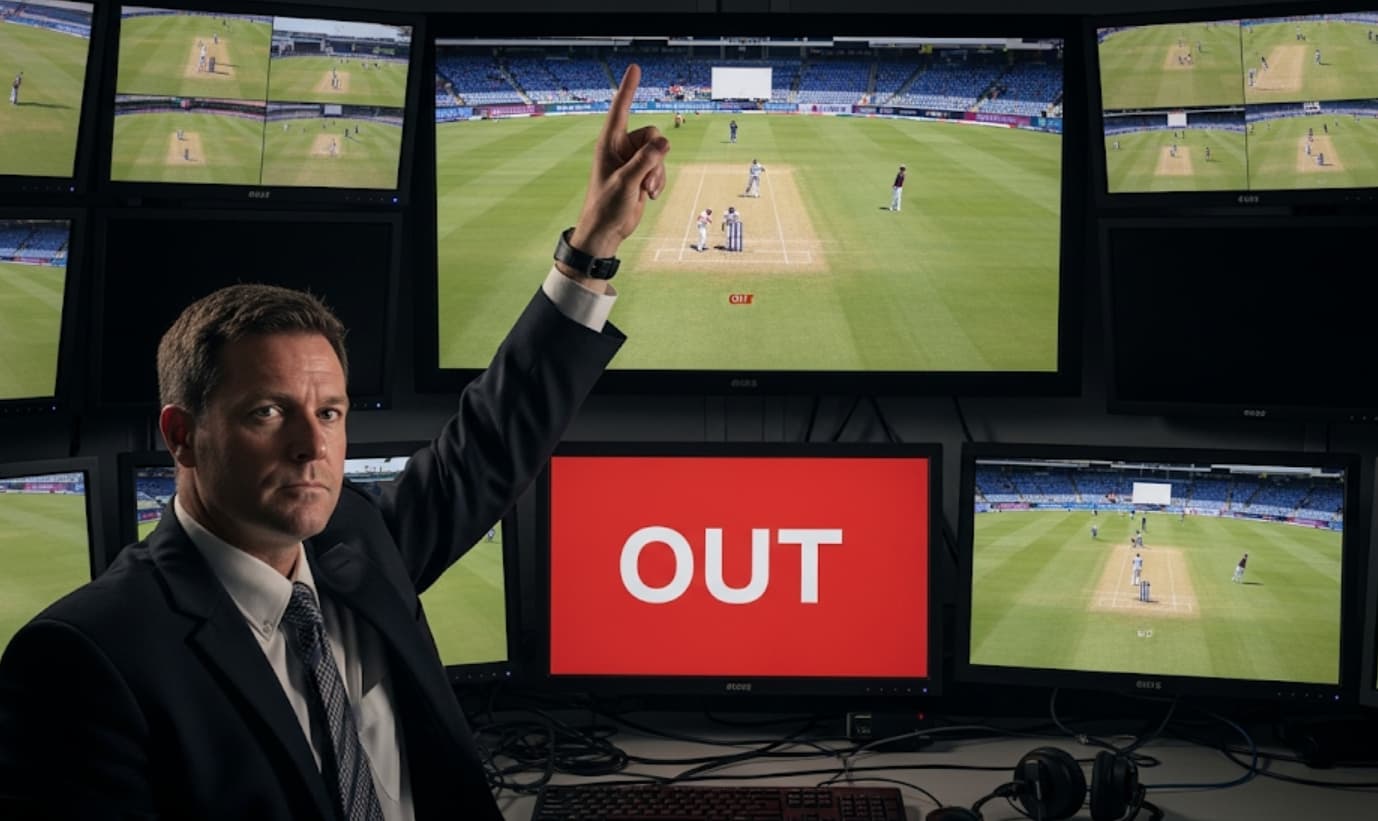
Cricket administrators realized something had to change, and in 1992, they introduced a revolutionary concept: the third umpire, an official positioned off the field with access to television replays who could help settle the toughest decisions.
Also Check: Godfather of Cricket
Timeline Table: Rise of the Third Umpire System
| Year | Event | Importance |
|---|---|---|
| 1992 | Third umpire system officially introduced | First time technology formally entered cricket decision-making |
| November 14, 1992 | Sachin Tendulkar dismissed via third umpire | Historic first decision changed cricket officiating forever |
| 1990s-2000s | Role expanded to include boundaries, catches, no-balls | Third umpire became integral to match officiating |
| 2008 | Decision Review System (DRS) introduced | Third umpire became central to comprehensive review system |
| 2010s-Present | Advanced technology integration (Hawk-Eye, UltraEdge) | Third umpire now manages sophisticated tech tools for accuracy |
Also Check: Indian Cricketers Wives and Girlfriends
The Famous 1992 Durban Moment
The date was November 14, 1992, and the venue was Kingsmead Stadium in Durban, South Africa.
India was batting in their first innings, responding to South Africa’s total of 254.
At the crease was a young Sachin Tendulkar, already showing glimpses of the batting genius he would become.
He pushed a delivery into the leg side and called for what looked like a comfortable single, his eyes focused on completing the run quickly.
What Sachin hadn’t fully calculated was the presence of Jonty Rhodes in the field.
Rhodes, who would go on to redefine fielding standards in cricket, was already demonstrating the lightning-quick reflexes and athleticism that made him legendary.
He swooped in from his position, gathered the ball cleanly in one motion, and released a rocket throw directly at the stumps.
The ball crashed into the wickets while Tendulkar was scrambling to make his ground, his bat desperately reaching for the crease line.
The on-field umpire immediately knew this was too close to call with certainty.
In a groundbreaking moment, he signaled to the third umpire, Karl Liebenberg, who was stationed off the field with access to television monitors.
Liebenberg watched the replays carefully from multiple camera angles, examining frame by frame to see exactly where Tendulkar’s bat was when the bails came off.
The slow-motion footage revealed the truth—Sachin was fractionally short of the crease.
Liebenberg communicated his decision, and the on-field umpire raised his finger. Tendulkar was out, and cricket history was made.
Player and Officials Table
| Role | Name | Details |
|---|---|---|
| Batsman Dismissed | Sachin Tendulkar | Young Indian batting star, 19 years old at the time |
| Fielder | Jonty Rhodes | South African fielding sensation with lightning-fast throw |
| On-field Umpire | Not specified | Made a historic decision to refer to the third umpire |
| Third Umpire | Karl Liebenberg | First official to make a technology-assisted decision in cricket |
| Match | India vs South Africa, 1st Test | Kingsmead, Durban, November 13-17, 1992 |
| Venue | Kingsmead Stadium | Durban, South Africa |
| Mode of Dismissal | Run out | Via the first-ever third umpire television replay review |
Why Sachin’s Run Out Became Historic?
The answer to Who Was The First Player To Be Given Out By The Third Umpire is Sachin Tendulkar, but the significance goes far beyond just his name.
This dismissal represented cricket’s willingness to embrace progress and acknowledge that tradition didn’t have to mean sticking with methods that could be improved.
For a sport that prided itself on upholding customs and protocols that dated back centuries, allowing television replays to influence decisions was a massive philosophical shift that not everyone welcomed initially.
However, the fairness argument proved impossible to ignore.
If technology could show definitively whether a batsman was in or out, why should the game rely solely on human eyes that might miss crucial details in split-second moments?
Tendulkar’s dismissal proved the system could work – the decision was correct based on the replays, and there was no controversy about whether the right call had been made.
This success opened the door for expanding the third umpire’s role and eventually led to the comprehensive Decision Review System that now defines modern cricket, where teams can challenge decisions and technology provides evidence to settle disputes.
Additional Trivia: Other Historic Tech Decisions
While Tendulkar holds the distinction of being the first player dismissed via third umpire in any format, cricket’s technological journey continued with other milestones.
In the history of ODI who was the first batsman to be given out LBW by a third umpire became another important question as the system expanded beyond just run-outs and stumpings to include other dismissal types.
The DRS era brought even more changes, with the first player out by DRS marking another evolution in how cricket used technology to ensure accurate decision-making.
These subsequent developments all trace their origins back to that November day in 1992 when Sachin walked back to the pavilion after the first technology-assisted dismissal in cricket history.
5 Duties of Third Umpire in Cricket
The modern third umpire has responsibilities that extend far beyond what Karl Liebenberg handled in 1992.
Here are the 5 duties of the third umpire in cricket as they exist today:
- Run-outs and Stumpings: Review whether batsmen made their ground before stumps were broken or wicketkeepers completed dismissals
- Boundary Decisions: Determine if fielders touched ropes while in contact with the ball, confirming fours and sixes
- Clean Catches: Verify whether catches were taken cleanly or if the ball touched the ground first
- No-Ball Checks: Monitor whether bowlers overstepped the crease or delivered illegal balls
- DRS Coordination: Manage Decision Review System appeals, working with technology providers to assess challenges
Cultural Impact: Beyond the Cricket Field
The third umpire concept has become so embedded in cricket culture that it’s even inspired entertainment.
The Third Umpire Movie explored cricket’s technological evolution through dramatic storytelling, showing how these officiating changes affected players and fans emotionally.
The phrase has also entered popular culture in unexpected ways—for instance, Third Umpire Jai Club references appear in social contexts where people discuss making fair decisions or needing an outside perspective to settle disputes, showing how this cricket innovation has influenced language and thinking beyond the sport itself.
Conclusion: A Legacy That Changed Cricket Forever
When people ask Who Was The First Player To Be Given Out By The Third Umpire, the answer is always Sachin Tendulkar on November 14, 1992.
But this fact represents so much more than a trivia question—it marks the exact moment cricket acknowledged that technology could make the game fairer without diminishing its spirit or traditions.
That run-out in Durban wasn’t just about one dismissal; it was about cricket choosing accuracy over uncertainty and fairness over rigid adherence to outdated methods.
Today’s cricket fans watching matches with instant replays, ball-tracking graphics, UltraEdge sound analysis, and comprehensive review systems owe a debt to that pioneering moment.
The question Who Was The First Player To Be Given Out By The Third Umpire will always point back to Sachin Tendulkar and Jonty Rhodes’ brilliant throw, but the real story is about how cricket successfully evolved while maintaining its essential character.
That single decision by Karl Liebenberg in 1992 opened doors to a future where getting decisions right matters more than preserving methods simply because “that’s how it’s always been done.”
Tendulkar’s dismissal changed cricket forever, proving that even sports with centuries of tradition can embrace innovation when it serves the fundamental goal of fairness and accuracy.